The Season of Becoming
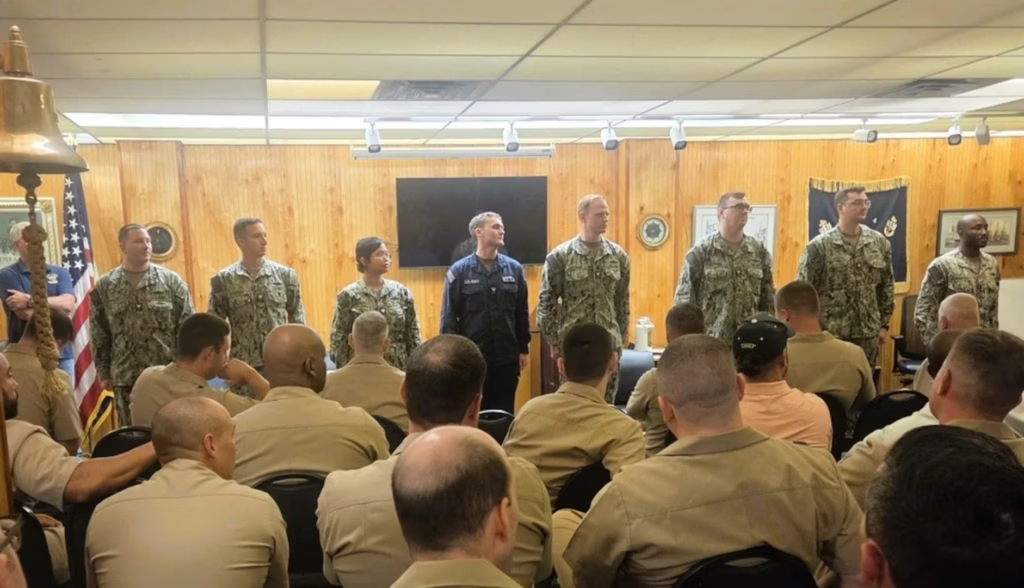
Every year, the Chief’s Season reminds me why the Navy’s backbone isn’t built in classrooms or through instruction manuals — it’s forged through challenge, reflection, and shared hardship. Watching this past season unfold, I saw once again how our Navy continues to develop ethical leaders the hard way — by asking them to look inward.
As a Command Master Chief, I learned that when a Sailor makes Chief, it’s not just a promotion, it’s a transformation. They’re stepping into a heritage that demands humility and strength. The combination cover and anchors aren’t rewards; they’re symbols of responsibility — to the Mess, to the crew, and to the moral standard that keeps the Navy aligned when everything else feels uncertain.
Tradition as Ethical Training
To outsiders, the Chief’s Season might seem like a test of endurance or tradition. But those of us who’ve lived it know it’s about something deeper, a deliberate moral shaping. Every challenge, every late-night conversation, every moment of friction is designed to reveal character.
When I helped lead the Chiefs through the Season, I wasn’t trying to see who could endure the most or shout the loudest. I wanted to see who would reach out to the teammate next to them. Who would listen when pride told them to talk? Who could accept criticism without resentment and offer help without hesitation.
Those are ethical traits, not just leadership qualities, humility, empathy, and accountability. The process builds leaders who understand that authority without integrity is hollow. And it reminds us all that leadership is never about rank — it’s about service.
Bridging the Deckplates and the Academy
Now, as a teacher at the Naval Academy, I have a unique perspective. I watch future officers develop their moral framework in the classroom while Chiefs in the Fleet refine theirs through experience. The magic happens when those two paths meet.
Our Navy works best when those worlds officer and enlisted, understand and respect each other’s ethical roles. Chiefs are not just technical experts or problem-solvers; they are moral translators. They take the command’s intent and make it real for the Sailors who carry it out.
That’s why I tell Midshipmen that one of their greatest resources as junior officers will be their Chief. The trust built between a new Ensign and a seasoned Chief can define the culture of a command. If both are grounded in shared ethics — respect, humility, and accountability — that partnership becomes unstoppable.
The Mess as a Moral Compass
There’s something special about walking into a Chief’s Mess during the Season. You can feel the weight of tradition — not as nostalgia, but as moral inheritance. The lessons passed down aren’t just about leadership styles or management techniques; they’re about identity.
The Mess reminds every Chief that they are now stewards of the Navy’s culture. When they see something wrong, they speak up. When they see a young officer struggling, they step in to help. When they see a Sailor on the edge, they pull them back. That’s moral courage in action.
And it’s exactly what we want our Midshipmen to see modeled when they report to the Fleet — enlisted leaders who don’t just execute orders, but uphold the Navy’s moral center.
Forged, Not Finished
Watching this past Chiefs’ Season, I was struck by how it continues to evolve while staying true to its roots. The traditions endure not because they’re old, but because they still work. They remind us that leadership development isn’t about perfection — it’s about progress, humility, and the willingness to keep learning.
As I tell both Chiefs and Midshipmen, leadership is a team sport. Officers and Chiefs don’t exist on parallel paths — they’re partners in purpose. One leads by commission, the other by conviction. Together, they safeguard the trust that holds the Navy together.
Master Chief Jon Bertera is a Fellow at the Stockdale Center for Ethical Leadership.