
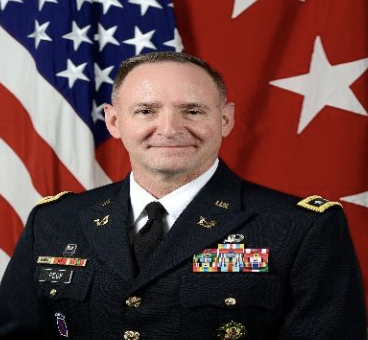
Lieutenant General (Retired) Charles N. Pede is a Professorial Lecturer in Law at George Washington University Law School, where he teaches the law of armed conflict and foreign relations law; and previously served as the 40th Judge Advocate General of the Army, the senior uniformed legal position in the Department of the Army.
After graduating from the University of Virginia and receiving a commission through ROTC, he attended the University of Virginia Law School. He holds an LLM in Military Law and a Master’s Degree in National Security and Strategic Studies, and attended the Judge Advocate Officer Basic and Graduate Courses, the Army Command and General Staff College, and the Industrial College of the Armed Forces.
As Judge Advocate General, Lieutenant General Pede supervised a worldwide law firm of over ten thousand lawyers, paralegals and support staff. Prior to this assignment, he served as the Chief Judge of the Army’s Court of Criminal Appeals, and commanded the Department of Defense’s only accredited legal degree granting institution, the Judge Advocate General’s School. During his 37 years of service, he served as defense attorney, prosecutor, congressional liaison, professor and general counsel to large Army installations and organizations. His overseas deployments included Operation Provide Comfort, Army Forces-Turkey; Operation Restore Hope, Mogadishu, Somalia; Operation Enduring Freedom, Afghanistan; and Operation Iraqi Freedom, Baghdad, Iraq.
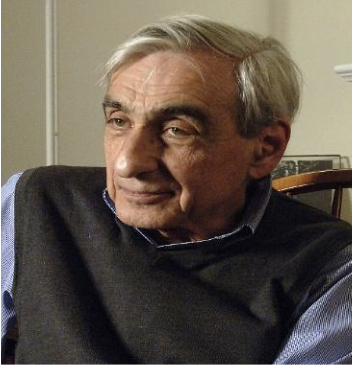
Dr. Michael Walzer is Professor Emeritus at Princeton University’s Institute for Advanced Study. As a professor, author, editor, and lecturer, he has addressed a wide variety of topics in political theory and moral philosophy: political obligation, just and unjust war, nationalism and ethnicity, economic justice and the welfare state.
His books (among them Just and Unjust Wars, Spheres of Justice, The Company of Critics, Thick and Thin: Moral Argument at Home and Abroad, On Toleration, and Politics and Passion) and essays have played a part in the revival of practical, issue-focused ethics and in the development of a pluralist approach to political and moral life. For more than three decades Walzer served as co-editor of Dissent, now in its 64th year. His articles and interviews appear frequently in the world’s foremost newspapers and journals. He is currently working on the fourth volume of The Jewish Political Tradition, a comprehensive collaborative project focused on the history of Jewish political thought, and his book The Struggle for a Decent Politics: On “Liberal” as an Adjective was published in January of 2023.
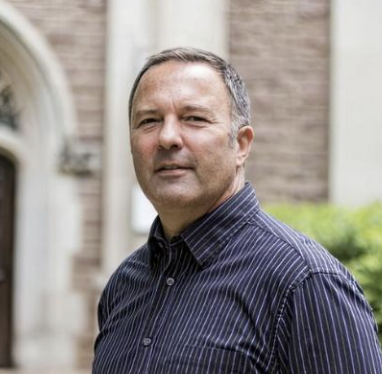
Dr. Kit Wellman is Professor of Philosophy at Washington University in St. Louis. He works in ethics, specializing in political and legal philosophy. His most recent book, Rights and Resistance, was published last year by Oxford University Press.

Dr. Rebeccah L. Heinrichs is a senior fellow at Hudson Institute and the director of its Keystone Defense Initiative. She specializes in US national defense policy with a focus on strategic deterrence. Dr. Heinrichs served as a commissioner on the bipartisan Strategic Posture Commission, which was created in the Fiscal Year 2022 National Defense Authorization Act. She also serves on the US Strategic Command Advisory Group and the National Independent Panel on Military Service and Readiness. She is also an adjunct professor at the Institute of World Politics, where she teaches nuclear deterrence theory, and is a contributing editor of Providence: A Journal of Christianity and American Foreign Policy.
Dr. Heinrichs earned her doctorate in defense and strategic studies from Missouri State University, where she graduated with distinction. She received her MA in national security and strategic studies from the US Naval War College and graduated with highest distinction from its College of Naval Command and Staff, receiving the Director’s Award for academic excellence. She earned her BA in history and political science from Ashland University in Ohio, was an Ashbrook Scholar, and currently serves as a member of the University’s Board of Trustees.
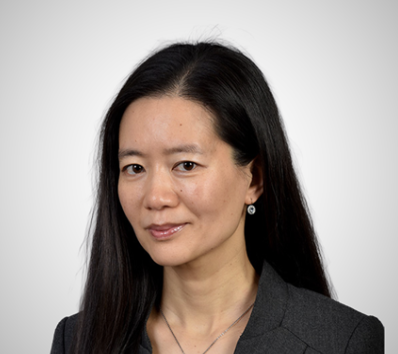
Dr. Yvonne Chiu is Professor of Strategy & Policy in the Naval War College at Naval Postgraduate School resident program (Monterey), and formerly in the Strategy & Policy Department (Newport). She writes on just war theory, international ethics and authoritarianism. Her book Conspiring with the Enemy: The Ethic of Cooperation in Warfare won the International Studies Association—International Ethics Section Book Award 2021 and the North American Society for Social Philosophy Book Award 2019.
She has been Jeane Kirkpatrick visiting fellow at the American Enterprise Institute, a national fellow at Hoover Institution, a member of Institute for Advanced Study (Princeton, NJ), a professor at University of Hong Kong, and a postdoctoral fellow at Political Theory Project (Brown University).

Dr. Jovana Davidovic is an Associate Professor of Philosophy at the University of Iowa. Her research and teaching interests include military ethics, applied ethics, social and political philosophy, philosophy of law, ethics of AI, and business and organizational ethics. She has published extensively on military ethics, ethics of AI, international law, and human rights. Her recent work has focused on AI and algorithm ethics in military settings and algorithm audits as well as just war theory, and refugees and displacement.
Dr. Davidovic also has a secondary appointment at the Law School and is a Senior Researcher at the Peace Research Institute Oslo, where she is leading a 3-year, $1,000,000 research project on Ethical Risk Management of AI-enabled Weapons Systems, and has been a Senior Research Fellow at the United States Naval Academy since 2021.
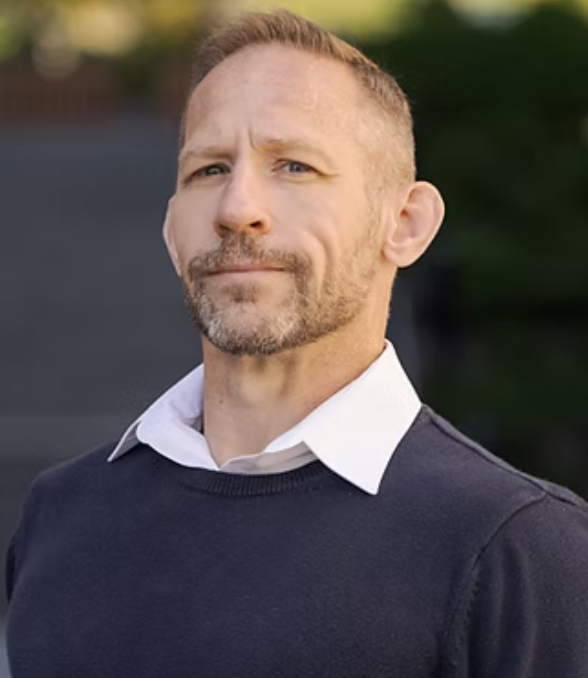
Dr. Michael Robillard is an Instructor of Ethics at the U.S. Naval Academy. Originally from Whitman, Massachusetts, he attended the U.S. Military Academy as an undergraduate, majoring in Art, Philosophy, and Literature with a focus in Philosophy, commissioning in 2002. After attending Infantry Officer Basic Course, Airborne School, and Ranger School, he was deployed to Iraq in spring of 2003 to early 2004 with 2-325 PIR, 82nd Airborne Division as a light infantry platoon leader. In 2005 he took part in the Hurricane Katrina Relief effort with the 82nd Airborne Division and finished his active-duty service commitment in June of 2007.
From 2009–2011, he attended the University of Victoria, British Columbia earning his M.A. in Philosophy. In 2016 Michael earned his Ph.D. in Philosophy from the University of Connecticut, focusing on issues of military ethics, just war theory, and civil-military relations. From 2015–2016, Michael was a research fellow at the Stockdale Center for Ethical Leadership. From 2017–2020, he was a postdoctoral researcher on counter-terrorism ethics at the University of Oxford. And from 2020–2021, he was a postdoctoral research fellow at the Notre Dame Institute of Advanced Studies working on issues of technology and trust. In 2024 he served as military science instructor for the Boston College Army ROTC program.
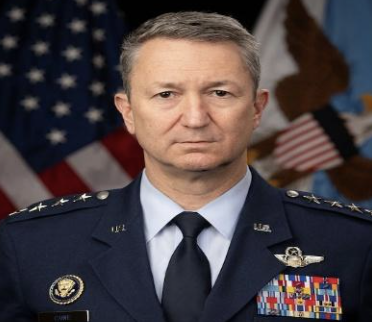
General Dan Caine is the 22nd Chairman of the Joint Chiefs of Staff, the nation’s highest-ranking military officer, and the principal military advisor to the President, Secretary of War, and National Security Council.
Prior to becoming Chairman on April 11, 2025, General Caine was the Associate Director for Military Affairs at Central Intelligence Agency. He has served in a wide range of operational, staff and joint assignments, primarily as an F-16 fighter pilot, weapons officer, member of the White House staff and special operations officer.
General Caine was commissioned in 1990 through the ROTC program at the Virginia Military Institute, and he has an MA in Air Warfare from the American Military University. He has completed a range of national security and leadership courses, including Harvard Kennedy School’s course for Senior Executives in National and International Security, and the Syracuse University Maxwell School’s Program on National Security.
As a Command Pilot, he has logged more than 2,800 hours in the F-16, including more than 150 combat hours. From 2009–2016, Caine was a part-time member of the National Guard and a serial entrepreneur and investor.
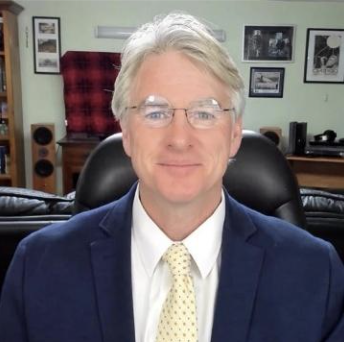
Dr. Dale Stephens is a Professor at Adelaide University (Australia). He is Director of the Adelaide Research Unit on Military Law and Ethics. He was an Editor of the Woomera Manual on the International Law of Military Space Activities and Operations. He is a former Australian Navy JAG and obtained his Masters and Doctorate in Law from Harvard University.
Dr. David Lefkowitz is Professor of Philosophy and Philosophy, Politics, Economics and Law (PPEL) at the University of Richmond, specializing in legal and political philosophy. His research interests span three overlapping areas: the morality of obedience and disobedience to law, analytical and normative issues in international law, and substantive moral questions in the conduct of international affairs. Dr. Lefkowitz is the author of Philosophy and International Law: A Critical Introduction (2020), as well as more than forty journal articles and book chapters.
He has held fellowships at Princeton University, the U.S. Naval Academy, and the National University of Singapore, and served as a visiting research scholar at Pompeu Fabra University.
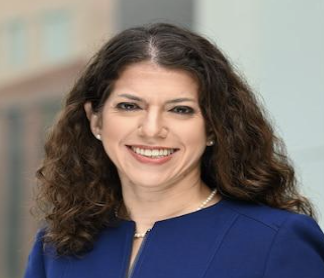
Dr. Jill Goldenziel is Professor at the National Defense University’s College of Information and Cyberspace. She is also an Affiliated Scholar at the University of Pennsylvania’s Fox Leadership International Program and Penn’s Partnership for Effective Public Administration and Leadership Ethics.
Her scholarship focuses on international law, lawfare, information warfare, U.S. and comparative constitutional law, the law of war, refugees and migration, and leadership. Her work has appeared in the Cornell Law Review, the American Journal of International Law, the American Journal of Comparative Law, the Virginia Journal of International Law, the University of Pennsylvania Journal of Constitutional Law, and the Arizona State Law Journal, among other scholarly journals. Dr. Goldenziel is also a Forbes.com contributor on Defense and National Security and is frequently quoted and cited in the press.
A sought-after speaker and consultant, she regularly advises elite Marine units, the Joint Force, Combatant Commands, and civilian agencies on lawfare and legal issues, and has briefed senior military and civilian leadership on her research. Dr. Goldenziel was previously a Professor at U.S. Marine Corps University–Command and Staff College, a Climenko Fellow and Lecturer on Law at Harvard Law School, a Research Fellow at the Harvard Kennedy School’s Belfer Center for Science and International Affairs, a Lecturer on Government and Social Studies at Harvard College, and a Visiting Assistant Professor at the Boston University School of Law. She clerked for Judge Thomas Buergenthal (Ret., International Court of Justice) and Prof. William W. Park on ICSID investor-state international arbitration tribunals.
Dr. Goldenziel holds a Ph.D. and an A.M. in Government from Harvard University, a J.D. from the New York University School of Law, and an A.B. from Princeton University.
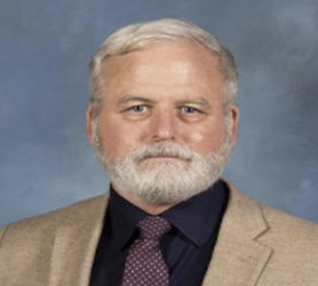
Dr. Tony Pfaff is currently the Director of Strategic Studies Institute (SSI) and the U.S. Army War College Press. He has served as the Research Professor for Strategy, the Military Profession and Ethics at the Army War College, and as a Senior Non-Resident Fellow at the Atlantic Council.
A retired Army colonel and Foreign Area Officer (FAO) for the Middle East and North Africa, Dr. Pfaff recently served as Director for Iraq on the National Security Council Staff. His last active-duty posting was Senior Army and Military Advisor to the State Department from 2013–2016, where he served on the Policy Planning Staff advising on cyber, regional military affairs, the Arab Gulf Region, Iran, and security sector assistance reform. Prior to taking the State Department position, he served as the Defense Attaché in Baghdad, the Chief of International Military Affairs for US Army Central Command, and as the Defense Attaché in Kuwait.
He served twice in Operation Iraqi Freedom, once as the Deputy J2 for a Joint Special Operations Task Force and as the Senior Military Advisor for the Civilian Police Assistance Training Team. He also served as the Senior Intelligence Officer on the Iraq Intelligence Working Group and as a UN observer along the Iraq-Kuwait border. Prior to becoming a FAO, Dr. Pfaff served on the faculty at West Point as an assistant professor of Philosophy. As a company grade Army officer, he deployed to Operation Desert Shield and Desert Storm with 82nd Airborne Division and participated in Operation Able Sentry with the 1st Armored Division.
Dr. Pfaff has a bachelor’s degree in Philosophy and Economics from Washington and Lee University, where he graduated cum laude with Honors in Philosophy; a master’s degree in Philosophy from Stanford University, with a concentration in the History and Philosophy of Science; a master’s in National Resource Management from the Industrial College of the Armed Forces, where he was a Distinguished Graduate; and a Doctorate in Philosophy from Georgetown University.
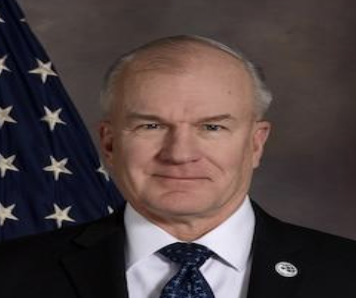
LtGen (Ret.) Gregg P. Olson became Chancellor of the National Defense University’s College of International Security Affairs on 13 January 2025, following a distinguished career in the United States Marine Corps.
As a career infantry officer, he commanded at the company, battalion (during combat), and Marine Expeditionary Unit levels, concluding his uniformed service as Director of the Marine Corps Staff, Headquarters U.S. Marine Corps on 1 October 2024. His earlier staff assignments spanned logistics and operations billets with infantry battalions, a Marine Expeditionary Unit, and a Marine division staff.
Outside the Corps’ operating forces, Chancellor Olson served in staff and ceremonial billets at Marine Barracks, Washington, D.C. Additionally, he served as an instructor and faculty advisor at the Marine Corps University and was the Marine Corps’ Director for Senate Liaison. Chancellor Olson’s service at Headquarters, Marine Corps included duties as Director of the Marine Corps’ 2016 Quadrennial Defense Review Office and as the Deputy Commandant for Plans, Policies, and Operations. Chancellor Olson’s field-grade joint assignment was as Assistant Deputy Director for Regional Operations (J-33), J-3, Joint Staff, where he qualified as a Deputy Director for Operations in the National Military Command Center.
As a general officer, Chancellor Olson was assigned as Deputy Commander, U.S. Marine Corps Forces, Central Command/Commanding General, Marine Corps Forces, Central Command (Forward), in Manama, Bahrain. During that tour, he was also designated Commander of Task Force 51/59, Fifth Fleet, U.S. Naval Forces, Central Command.
His joint assignments as a general officer included serving as the Joint Staff (J-5) Deputy Director for Political-Military Affairs, Middle East (DDME), and as Director of Operations and Cyber (J-3) at the United States Africa Command in Stuttgart, Germany.
Chancellor Olson grew up in Cumberland, RI, Montreal, Quebec, and Westlake Village, CA. He graduated from the United States Naval Academy in 1985 and also holds graduate degrees from the College of Naval Command and Staff, and the National War College.
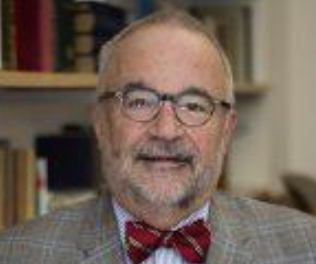
CDR (Ret.) Mark Metcalf has been an Adjunct Lecturer at the University of Virginia since 2014, teaching courses at the East Asia Center on traditional Chinese literature, and at the McIntire School of Commerce on Chinese business practices & cultural norms.
Prior to UVA, Professor Metcalf spent over 25 years as a contractor working as a Signals Analyst, Systems Engineer, Project Manager (PMP), Technical Translator (Russian and Chinese), and Intelligence Analyst in support of the Department of Defense and other U.S. government agencies; assignments involved extensive travel to Europe, Asia, and Australia. This career was preceded by service as a Naval Officer, initially as a Surface Warfare Officer and ultimately as a Cryptologist, where he retired at the rank of Commander.
In addition to cross-cultural business matters, Professor Metcalf’s research interests include contemporary views of China’s People’s Liberation Army (PLA) regarding strategy, military ethics, political warfare, and the influence of Xi Jinping thought on the military culture. He enjoys translating and analyzing military and political texts to better appreciate the PLA’s approaches to decision-making. His analyses have been widely published and presented.
Professor Metcalf is a 1976 Far Eastern Studies (Chinese) graduate of the U.S. Naval Academy and the year-long Russian course at the Defense Language Institute. He has an MSEE from the U.S. Naval Postgraduate School, and graduate degrees in Chinese Studies (MA) from the University of Arizona and Oriental Studies (MPhil) from the University of Cambridge.
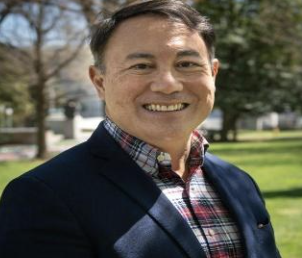
Dr. Gary Espinas is an Instructor in the U.S. Naval Academy’s Political Science Department. Prior to this role, he served in the US Army and retired as a Colonel in 2013 after 26 years of service. As a Foreign Area Officer (FAO), he served as Military Professor of National Security Affairs and FAO Chair at the US Naval Postgraduate School in Monterey, California; Director for Russia, Caucasus, and Black Sea Policy in the Office of the Secretary of Defense, Pentagon; Conventional Arms Control Advisor in the Department of State; and Political-Military Officer at the US Embassy in Moscow, Russian Federation. Previously, Dr. Espinas led field artillery formations at the tactical level, including a combat deployment to Iraq.
Dr. Espinas earned an MA from Harvard University and a BA from the University of California at Berkeley. He also earned an MA in Security Studies degree from the US Army War College, and a Doctorate in Liberal Studies degree from Georgetown University. He speaks Russian and Spanish.
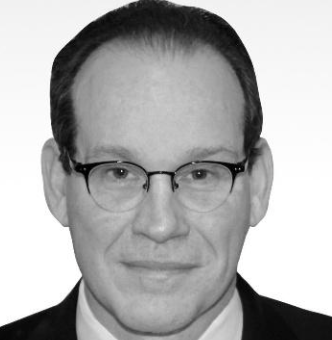
LtCol (Ret.) Steven R. Ward worked as an intelligence officer for nearly thirty years with the Central Intelligence Agency, covering Middle Eastern, South Asian, and related national security issues. He served as a deputy national intelligence officer for the Near East and South Asia on the National Intelligence Council (2005–6) and as a director of intelligence programs for the National Security Council (1998–99). From 2010 to 2012, he was a CIA visiting professor at the United States Naval Academy. Since 2017, he has been a contract historian for the Joint Chiefs of Staff Joint History and Research Office.
He is a retired US Army Reserve Lieutenant Colonel and a United States Military Academy graduate. He also is the author of Immortal: A Military History of Iran and Its Armed Forces (Georgetown University Press, 2nd ed. 2014) and Iran’s Ministry of Intelligence: A Concise History (Georgetown University Press, 2024).