
In the education of a military officer, it is not sufficient to cultivate technical competence alone. One must also nurture judgment, moral discernment, and a steadfast devotion to the constitutional order the officer is sworn to defend. Nowhere is this dual imperative more urgent than in the United States, where military power is embedded in a republican tradition that assigns supreme authority to the civilian polity. The liberal arts—history, philosophy, literature, political theory—are not ancillary to this tradition. They are its lifeblood, shaping military leaders who understand their service not merely as an exercise in command, but as a calling bound to civic virtue and constitutional fidelity.
At the core of the liberal arts tradition lies a set of enduring competencies: critical thinking and analytical reasoning, ethical judgment and moral prudence, effective written and oral communication, inquiry and information literacy, creative and integrative thinking, civic and global engagement, collaboration and teamwork, and resilience, adaptability, and intellectual curiosity. These competencies are not only essential to the formation of thoughtful citizens, but indispensable to the development of principled professionals and warriors who are prepared to wield authority with wisdom, restraint, and a deep sense of constitutional fidelity.
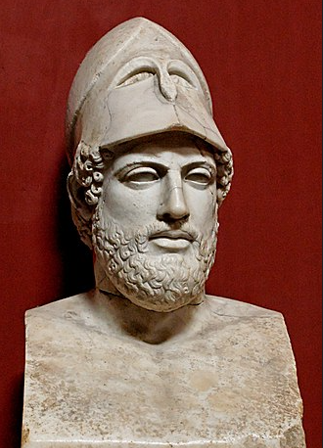
In his immortal Funeral Oration, as captured by Thucydides, the great Athenian general Pericles paid tribute not merely to the courage of Athenian warriors, but to the culture that produced them. Athens, he declared, did not rely on compulsion but cultivated citizens who were “lovers of beauty without extravagance and lovers of wisdom without softness.” The Athenian soldier fought not only with skill, but with understanding—with a vision of what the polis was and why it was worth defending. War, in this conception, was not the domain of brute force alone, but of deliberation, prudence, and love of the common good. The citizen-soldier was formed as much in the agora as on the battlefield.
Socrates, the exemplar of Athenian conscience, extended this civic ethos. Refusing to flee execution, he upheld the primacy of law and moral reasoning above self-preservation. To him, a life unexamined was not worth living—and certainly not worth taking up arms to defend. His commitment to philosophical inquiry as the path to virtue established an enduring link between education and public service.
Rome, inheriting the Greek ideal of the citizen-soldier, grappled with the strain of imperial expansion and the growing autonomy of its military elite. Cicero, writing as the Roman Republic teetered on the edge of collapse, warned with prophetic clarity of the danger posed by military dominance and personal ambition. In De Re Publica and De Officiis, he argued that a republic could only endure if its leaders were guided by a deep education in justice, philosophy, and civic duty. He saw clearly that when power is wielded without virtue, it accelerates the descent into tyranny.
A generation later, Seneca wrote from within the belly of that tyranny, serving as advisor to the emperor Nero. Though complicit in the regime, Seneca’s Letters to Lucilius and moral essays reflect an enduring reverence for liberty, virtue, and the soul’s inner sovereignty. His Stoic philosophy called for the cultivation of character as a bulwark against corruption, insisting that true leadership stems not from fear or dominion, but from wisdom and self-command. For both Cicero and Seneca—one warning of tyranny’s rise, the other enduring its reign—the free society rested on the balance of civic and military power, the rule of law, and the cultivation of virtue.
The American experiment inherited this classical lineage of the idealized citizen-soldier but transformed it through the lens of constitutional republicanism. Deeply wary of standing armies, the Founders envisioned military service as a civic responsibility—an extension of citizenship, not a separate class or caste. Yet as the demands of modern warfare necessitated the creation of a permanent military establishment, this foundational ideal was not abandoned but reinforced. Institutions such as the U.S. Naval Academy, West Point, and the Air Force Academy were not founded merely to produce tacticians and commanders, but to cultivate citizens in uniform—leaders who would exercise power with restraint, guided by ethical reasoning, moral judgment, and a steadfast loyalty to the constitutional order they are sworn to defend. The establishment of a standing military did not diminish this dual imperative; it intensified its urgency.
This institutional architecture finds its modern theoretical foundation in the work of Samuel Huntington. In The Soldier and the State, Huntington argues that liberal democracy survives only when the military remains apolitical, professionalized, and subordinate to civilian control. He outlines a professional military ethic built on three pillars: expert knowledge of the management of violence, responsibility to society, and unambiguous subordination to legitimate civilian authority.
When this ethic collapses, the consequences can be catastrophic. Huntington turns to the interwar experiences of Germany and Japan as cautionary examples. In both states, the officer corps became ideologically captured and politically emboldened. In Weimar Germany, military leaders tolerated—if not abetted—the rise of Hitler, believing he would restore order and power. In Imperial Japan, military factions gradually eclipsed civilian governance, initiating a campaign of conquest rooted in national myth and martial domination. In each case, officers abandoned their duty to the state and society, and instead became instruments of regime ideology and violent expansion.
Huntington’s deeper warning is moral, not merely structural: these tragedies were not only the product of failed institutions, but of failed character. The German and Japanese officer corps had ceased to be stewards of constitutional or imperial order. They became agents of ambition, untethered from civic virtue. One can reasonably speculate that had either nation produced an officer corps formed in the liberal tradition—imbued with an ethical vocabulary of restraint, legitimacy, and fidelity to a higher constitutional order—the course of history might have shifted. The devastation of the Second World War, its unimaginable human toll, and the collapse of those regimes were enabled in part by the moral failings of the military officer corps of Germany and Japan.
This is the indispensable function of the liberal arts in military education. Courses in ethics, history, political theory, and constitutional law are not luxuries—they are the disciplines that train officers to think clearly in moments of moral ambiguity, to discern lawful authority from unlawful command, and to understand that the military’s power is derivative, not sovereign. The liberal arts form the conscience of the profession of arms.
At the United States service academies, these disciplines ensure that officers recognize their highest obligation: to the Constitution, not to transient political leaders; to the people, not to themselves; to justice, not to expediency. They are taught not only how to fight, but why—and when not to. This is how the American military preserves its character as a servant of the republic rather than a master of it.
Pericles once declared that the glory of Athens resided not merely in its strength, but in the nobility of its spirit—that it was a place where the soldier and the citizen were one and the same, formed by a love of beauty, wisdom, and freedom. The American Republic, too, depends on such unity. And as long as we continue to educate our officers in that spirit—through both the martial disciplines and the liberal arts—we will ensure that our defenders remain not only warriors, but guardians of a constitutional order worthy of their sacrifice.